Trump

It has been a fascinating year, I must say.

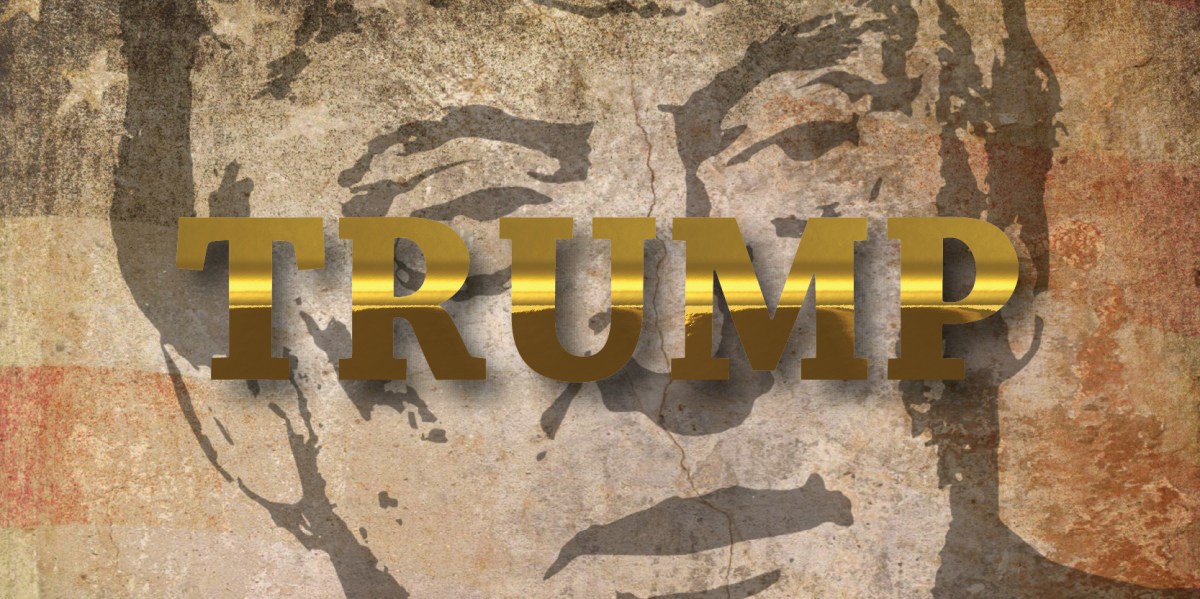
Back in July of 2015 I was sitting on a sailboat off the shoreline of Chicago with a friend from out of town and another friend—the owner of the boat. It was a beautiful blue and breezy summer day, and we were drifting blissfully along overlooking the shimmering, sun-bathed skyline. I was playing tour guide.

“So that’s the Sears Tower—AKA the Willis Tower. That one over there is the John Hancock. The glassy one right in the middle? That one’s the Trump Tower.” I paused. Then added with a grin, “You know? Our next president.”

My visiting friend smiled back knowingly. “Well. You never know.”

I’m sure I said something along the lines of, “Wayeell… some-times ya do.” And so we drifted along. I had no idea the strange saga I was about to watch our nation undergo.

Continue reading “Trump”

MLK | Letter from a Birmingham Jail

The tune is not very timeless, but the lyrics still communicate. In James Taylor’s 1991 song Shed a Little Light, he wrote

Let us turn our thoughts today to Martin Luther King
And recognize that there are ties between us,
All men and women living on the Earth.
Ties of hope and love, sister and brotherhood, that we are bound together

There is a feeling like the clenching of a fist
There is a hunger in the center of the chest
There is a passage through the darkness and the mist
And though the body sleeps the heart will never rest

Shed a little light, oh Lord, so that we can see, just a little light, oh Lord.
Wanna stand it on up, stand it on up, oh Lord,
Wanna walk it on down, shed a little light, oh Lord.

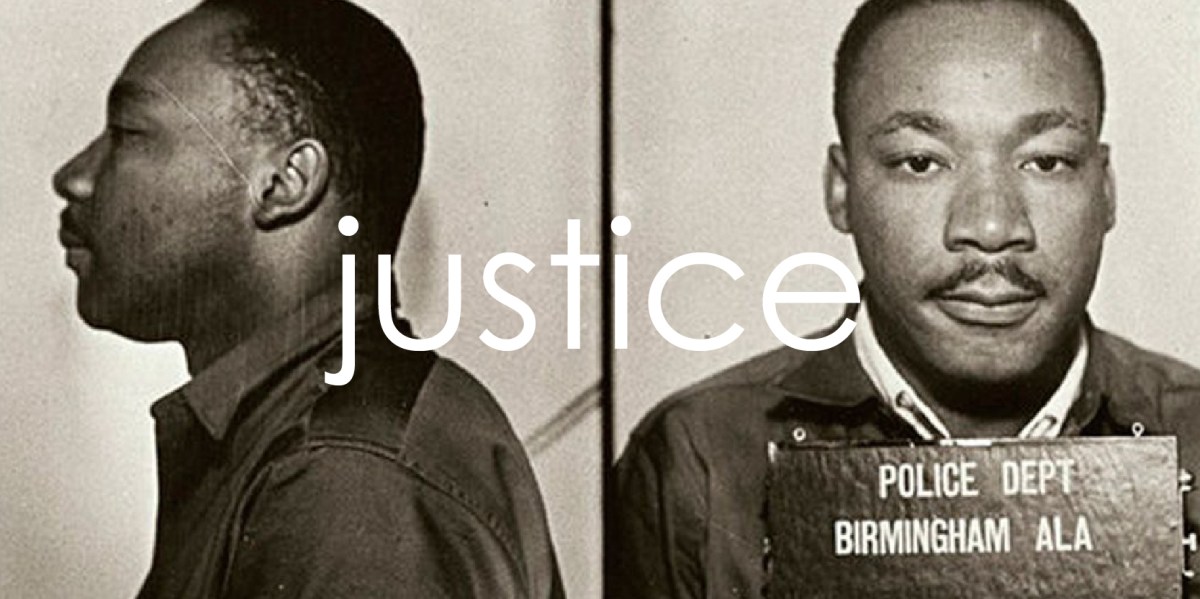
I don’t know that a nation like ours with a history like ours or a present like ours can turn our thoughts often enough to the otherworldly, redemptive vision of Martin Luther King. Certainly of all the things you might trip into today, be you off work, on work, occupied or otherwise, wouldn’t it be important to spend 10 or 15 minutes swept into the sacredness of King’s vision for justice and equality, but, above all brotherhood and sisterhood? I think so. Don’t neglect to find such a moment during this day. For we forsake those things we forget, even, especially the proverbial first things.

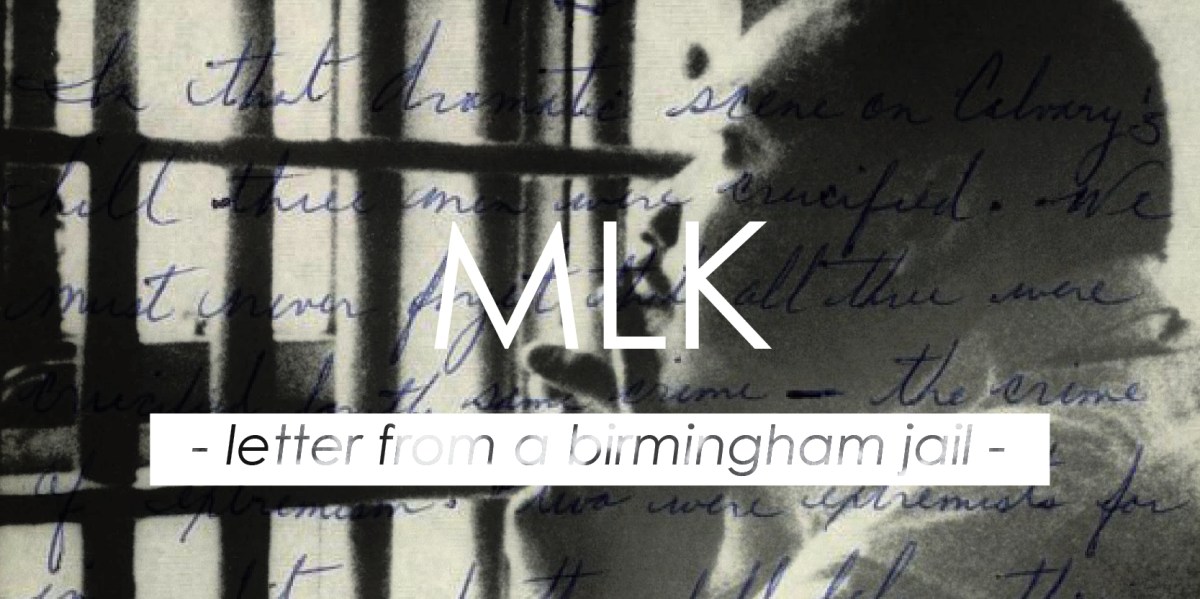
I’m reprinting below the entire text of King’s Letter from a Birmingham Jail. I reflected on it during Friday’s post and gave a bit of its backstory.

I have a bit of a habit of using Monday’s post as a venue for reflecting on art. Can an open letter extolling the expounding upon the biblical and social urgency of racial justice be considered art? Can it be called beautiful, evocative, important, inspiring? In the case of this epistle, the answer is yes to all and so much more. It has its own animate power and presence, the same as any masterpiece. Like van Gogh or Bach, it can stop you in your tracks. If this is not art, than our definition of art must grow. The same could be said of the way this text belongs in many important categories. If you live in America and have never ventured into this text, you are poorer for it. If you are a Christian and have never annexed King’s vision for justice into your own, you have needlessly retarded your spiritual growth. If both are true of you, I would urge you to make this a matter of sacred responsibility—I mean that.

Canadian aboriginal leader George Erasmus noted,

Where common memory is lacking, where people do not share in the same past, there can be no real community.

Where community is to be formed, common memory must be created.

King’s letter offers us a needed path to common memory and, thus, a path to real community—within our society and within the church. How needed this is in these days!

It was King himself who grieved that the most segregated hour in America was 11 am on Sunday morning. How might the American church offer any prophetic energy or insight within our nation if this remains unchanged? It cannot.

And so, without further adieu, I am providing the full text of King’s letter below. May we walk upon its light. Continue reading “MLK | Letter from a Birmingham Jail”

Justice and Imagination

Necessity, they say, is the mother of invention. What then is the mother of necessity? What I mean is, how is it that we come to determine something necessary, imperative or indispensable? How do certain things find their way into that conceptual compartment?

More importantly, how does the right stuff find its way there? Because, if necessity is the mother of invention, then we will only ever apply the potency of our human inventiveness to those things we perceive to be truly necessary.

And is this where justice resides for us; for you; for me? If not, how might it be birthed into our domiciles of necessity?

Continue reading “Justice and Imagination”

7 Guideposts for 2018

This piece is meant as a companion to my earlier Resolve posting, in which I borrowed an image from the eminent Robert Frost’s The Road Not Taken that might serve us in our resolution-making; e.g., that we might see resolutions as broader than self-improvement tasks, and more as existential way-chosings.

Two roads diverged in a yellow wood,
And sorry I could not travel both

Frost’s traveler confronts his finitude of being but “one traveler” and is beset with angst over which path to take. In the end, he ventures down “the one less traveled by”—”Because it was grassy and wanted wear.” This, wrote Frost, “has made all the difference.”

In my previous piece, I recommended a varietal of resolution rooted in a collective, transformational and qualitative soil; resolutions rooted in our yearnings for what this world needs most and our own audacity to, in Gandhi’s phrasing,

Be the change that you wish to see in the world.

Don’t we all pine for newness in 2018? Haven’t we been drawn onto some regrettable paths? I know I have.

Would you allow me to describe some comparative traits of paths diverging before us? And might I recommend one trait-set as preferable? (I’m going to do so regardless of what you’re thinking right now, but I thought it would be polite to ask.) Continue reading “7 Guideposts for 2018”

Resolve | #Friday500

Over the course of my life I’ve determined that two types of people inhabit this earth: (1) those in whom resolutions imbue an energetic and aspirational focus with propelling effect, and (2) those in whom resolutions behave like a kind of masochistic minefield, with which they feel obliged to afflict themselves each year in order of appease the gods of social custom. I’d place myself in the latter category. [Sigh.]

This can probably be generalized to the goal-makers and non among us, and I’m certain that it has everything to do with the way each of us related to such idealized projections of our future-selves. All I know is how they make me squirm.

“Are you making a list of things to feel horrible and guild-ridden about this year?”

Do I sound jaded? I suppose I am.

And still, despite myself, I’m allured, as moth to flame, by the renovative possibilities represented in these Gregorian demarcations of time—carpe annum! (Or does the annum carpe me?) I’m a glutton for punishment.

Now that I’ve got that off my chest, I do want to offer up some musings on the hullabaloo of this New Year’s ritual, because I do strongly believe that if there’s one thing our whole freakin’ society needs right now it is a good, long, hard look in the mirror. Am I right? I think we can all agree that 2017 was weird, and not “good weird”. More like, “What in the Sam Hill is happening?” weird. And I bet 2017 showed you some of your own more, shall we say, interesting qualities? Yeah, let’s go with interesting. There aren’t enough memes.

Where to go from here?

Robert Frost wrote a satirical (yes, satirical) poem which—its familiarity notwithstanding—offers us an apt image for occasions like this:

I shall be telling this with a sigh
Somewhere ages and ages hence:
Two roads diverged in a wood, and I—
I took the one less traveled by,
And that has made all the difference.

The title of the poem is actually The Road Not Taken, which presents the reader with an interpretational conundrum. It was intended as derisive critique of vain agonizing over paths not taken. He wrote it as a good-natured barb toward an indecisive and wistful friend, the poet Edward Thomas, about the inevitabilities of remorse in life filled with choices. It was a joke, but no one laughed. It couched indecision and regret in language of cowardice and naiveté (“Two roads diverged in a yellow wood, / And sorry I could not travel both”), nonetheless the barb inadvertently affixed itself to quivers of arrow and pierced many a heart; including its original recipient, who reported being staggered by it.

It disclosed a common human longing: to reflect on one’s life with joy and not sorrow. Thus Frost’s verse unmoored itself from it’s author’s winking intent, and has exerted its own scionic legacy.

Frost said of one path that it was “grassy and wanted wear”. As so many tread down the thoroughfares of oblivion in our own day, are there not some grassier, if more uneven, paths themselves wanting wear? I think so. I think we can find in these paths some better, if less popular, ways forward. Let’s!

In this post, I would like to offer three preliminary ideas on what might enhance our resolution-ing this time around; call it an assessment of the soil quality in which they might grow. My intent is to follow this up with another post profiling traits of paths we might seek out.

But here I offer three ideas on renewing our resolution-making for the year ahead.

Firstly, don’t our resolutions tend to be very self-focused instead of collective or communal? This betrays a troubling hint of narcissism; that competitive whiff of, “this year I’ll be better than a few more people!” Surely that isn’t what our world needs more of. How about situating our resolutions in a world of personal, important and lasting repercussions; not just the egoism of our age? Maybe invite others into your resolutions?

Am I my brother’s keeper? Hope to God more might answer yes!

Secondly, resolutions tend to value doing over being and becoming, don’t they? This relates to the previous point, but I just wonder if this isn’t a bit shallow. Jesus once called people fools for ostensibly forgetting that he (God) who made the outside of a person also made the inside—implying they were both equally real and important. He also once said what we put into ourselves isn’t the problem, but what comes out. Being and becoming are admittedly harder and resist tidy listing, but lets at least connect our doings to them this year. Travel to become more broad-minded and empathetic, exercise to gain more dominion over self in order to serve others, read to see the world through the eyes and imagination of another with warmth and appreciation.

Visualize the year ahead as an instrument for the shaping of your soul, and resolve to be a willing participant!

Thirdly, our resolutions trend toward quantitative instead of qualitative. That’s a problem, because, per my last item, these could nudge us toward valuing quantity over quality, or betray how expeditiousness too often comes at the expense of the quintessence.

Your life will leave a wake this year. Will it be restorative, beautiful, humane and enriching? By nature, the qualitative defies quantification, but that doesn’t mean it can’t be measured. It is often those around us who might enable us to apprehend our progress in qualitative resolutions—they may even help us frame them!

What I’m advocating is a resolution-outlook that asks more more fundamental questions. What is most needed in the world around me? Who is the version of me I might offer with gladness? How might the quality of my life be enriching in nature?

Lean into the collective, the transformational and the qualitative in 2018. Our world could use these types of resolutions. And I think our world is famished for those who will  forge better pathways, even through the thickets, to more humane destinations. This will require resolve in both its verbal and nounal form: a resolve toward where one will and won’t journey, and the resolve of accepting the assignment, however rugged or lonely.

I imagine, as did Frost, two diverging paths. The inevitability of choice is forgone; either stay the course or deviate, life offers us no passes.

Yet knowing how way leads on to way,
I doubted if I should ever come back.
Way does indeed lead to way, so we do well to chose well our ways when given the opportunity. May your New Year’s resolutions be a form a way-chosing which leaves you with even more splendid, albeit onerous, way-choices one year hence. And may we bring others with us on these grassy paths in want of wear.
Here’s to 2018!
Patriotism | #Friday500

We’re having one of those awkward and passive-aggressive non-conversations these days, aren’t we? The topic is patriotism, and, though it typically inhabits the subtextual dimension of values, it does have a tendency of breaching the surface and inserting itself abruptly into the conversation. That’s what’s happening right now.

It’s an elephant in the room, and, like the fabled Indian elephant, we’re all gathered about it like blind folk insisting our subjective impressions be accepted as authoritative. You know the fable, right? A group of blind travelers happens upon said pachyderm, and each places their hands on one section of the animal then attempt to describe it. But each report seems incompatible with the next! Is it hard or squishy, floppy or firm, rough or smooth? They bicker about whose version should be adopted as definitive. Of course the seeing observer would note that their disagreement stems from their dual debilitations of sightlessness and subjectivity. A perceiving observer, however, would name their real debilitation as obstinance; a puzzling refusal to recognize one’s obvious limitations.

The conceptual real estate of patriotism has always been subject to contentious and conflicting claims of possession. This has situated the idea squarely in a Purgatory of parlance. In colonial-era Britain, the term was a political byword; a means of associating one’s opponent with those whose love of country had cost them their civil instincts. In true American fashion, the byword was playfully co-opted (much like “yankee doodle”) into the revolutionary vernacular.  We were busy starting a new nation, and if they wanted to call us patriots, so be it!

And so patriotism received its coronation into the courts of unwritten American virtues. As such, we’re often loath to concede just how precarious the concept really is, and how, as an unexamined virtue, it might degrade into something foul. Continue reading “Patriotism | #Friday500”

Racism Series |#Friday500

Lately I’ve been reading, thinking and writing on the topic of race. Many have been so kind as to join me in this important conversation. Some have mentioned these posts to be helpful. In light of this, I am providing links to the entire series below, along with some excerpts from each.

Hoping these might serve you as you bring this needed dialogue into your own spaces.

RACISM I | RACE

But we can’t move this forward until we understand the term “race”.

Put briefly, there’s no such thing as race! The only thing that makes race a thing is that it has been socially engineered to be so. Race is a quasi-scientific category; a category that was invented for socio-cultural reasons, but has been met with repeated failure in its attempts to be “science-ized” in order to support the social construct.

This was observable in the middle of the last century in Nazi Germany, and their promotion of the idea of a superior Aryan race—an idea with roots in the 1850s. Nazi propaganda reflected their unique efforts to demonstrate Nordic racial superiority through pseudo-science. We recoil at these notions, but then forget to interrogate our own understanding of race. Nazi racial ideology is rooted in the racial constructs of Western, white civilization going back into the 1400s.

Now I’m sure that some of you reading are, at this point, so certain that race is a fixed aspect of humanity, that you are questioning the very notion of it having social origins; as though I am telling you that the elements of the Periodic Table are only a social construct.

But race, as we know it, is a superficiality that has been co-opted into Western thinking with a dehumanizing intent. Yes, intent!

RACISM II | DEFINED

And while a mutually-understood employment of the term “racism” is critical toward any meaningful dialogue, it must be said up front: whites are wrong on this, and non-whites are right.

My previous post was aimed at clarifying our understanding of race in general; namely, that it doesn’t exist. Race has, however, been conjured into existence as a means of sub-dividing humans in a fashion more akin to species. But why would anyone want to do that?

Race is a pseudo-scientific socially engineered construct for sub-classifying peoples based on superficial physical traits in order to justify sub-human acts of exploitation toward them.

Read that again. If you miss it, the rest of this will be lost on you.

Of course, there are physical traits that characterize people-groups from various regions of our world; skin color, hair color and type, other facial variations. This is undeniable. But this is not race—not as it has been deployed in the history of the West and in our nation!

And the socio-scientific concept of “ethnicity” is categorically valid; involving a multifaceted study of geographical, genealogical, cultural and lingual factors. Ethnicity is a sociological and anthropological category for understanding meaningful features of people-groups. But this is not race! Race it different. Ethnicity is benign. Race is malignant.

The fiction of race is the basis for the fact of racism—a superficial, systematic and societal sub-classification of people for the sake of exploitation.

But this is not how white people define racism.

RACISM III | WHY WRITE ON RACE?

…my trusted non-white friends, colleagues and students all agreed that white voices must remain in the chorus on this topic. I’m understanding the why behind this more and more.

From the earliest days of abolitionism (a movement that arose immediately on the heels of the colonial era and the widespread advent of chattel enslavement), through the Civil War and Civil Rights movement, voices among the white populace have played an irreducible role toward the cause of racial justice. There is a position and venue into which our voice has more purchase, and oftentimes we know the vernacular for playing translator between both sides.

As much as anything though, I’m seeing how silence is a way of retreat. When those of us in the white community can’t or won’t name racism or address its damage, it communicates either tacit endorsement or craven betrayal. Most people of color have spent their lives swimming upstream against racial currents. They’ve become adept at feigning indifference and maintaining poise in the face of it. As uncomfortable as it is for whites like myself to confront these societal dynamics—even calling them “evil” or “unjust”—still those affected by them have no such choice. Measures of healing come when we enter into their sorrows and even anger. And though I’ve never once met a person who readily admits to being a “racist”, still we know racism is alive and well. If my own history can be any indicator, it seeps out despite our best efforts.

Maybe what I’m dancing around right now is my own racism; my willingness to prefer sloppy stereotypes over human considerations, to prefer judgement over understanding, to exclude or insulate, to remain willfully oblivious to how I benefit from racial constructs and willfully loath to consider my obligations toward remedies, my own hidden attitudes of superiority and innate deservedness. Maybe I’m learning how to grapple within and grapple without in these issues—whether I’m brave enough to enter further into the rough terrain of longsuffering involvement. I can, after all, still use my racial identity as exemption from all this.

But how can I do so, now that I grasp that this is the wrong thing to do?

RACISM IV | PRIVILEGE

Privilege is a good word, not a bad one. Its connotations overwhelmingly positive; fortified with the soul-nourishing nutrients of gratitude, humility, contentment and purpose. For instance, I am privileged to be a husband and father, privileged to be employed, privileged to be in good health. For all this, I feel blessed. Who am I to come into such bounty?

The recognition of privilege appreciates that we have been beneficiaries of forces external to ourselves; outside our powers of control. Privilege is the foil of entitlement, redirecting our attention to endowments, causing us to treasure them.

Yes, privilege has the power to animate those human faculties of kindness, responsibility, compassion and magnanimity which deploy us into the world as life-givers. Yet it carries with it an existential threat; like a conceptual Trojan horse, it might occasion the overthrow of our sense of personal credit—if permitted past our gates of defense.

You see, external credit—especially beyond one’s agency—is a diminution of self-credit, and undeserved prosperity is anathema to the American ethos, is it not? And so we come to privilege not entirely under amicable terms; it is more of a truce. “I will acknowledge you only so long as my own credit remain intact.” But privilege will never comply with this, because the truth will never comply with this. Thus, we are all prone to subscribe to a myth of singular self-credit; or at least we must preserve self as the majority agent in our personal credit narrative—and this usually carries over into our corporate identities.

No one wants to be confronted by the notion that there are two sets of stairs, and that theirs is the carpeted, sheltered, dependable set leading to a preferable location. We prefer the other set be tucked in the back-alley; out of sight. No one wants to be confronted by the revelations that we pass, as it were, through unequal portals, and that this may, in large part, explain why we end up in prefereable localities along with others like us.

But the point of mentioning white privileged is not an exercise in scolding. It is an exercise in awareness, and, as in the case of all privilege-awarenesses, to awaken humane attitudes and quell the baser ones.

RACISM V | A PATH FORWARD

My generation was indoctrinated into the post-racial mythology, and not just whites but all. We called it “color blindness” and it sounded sublime. But it was a bandage on a gangrenous wound; partially concealing, but impeding real healing. I mentioned it in a previous post that America cannot ever be truly post-racial. Racial ideology is among the chief architects of our nation and, as such, its infrastructures and design-intents may never be fully resolved. Post-racial America may be an oxymoron, but a racially redeemed America may be a worthy undertaking.

Truth and reconciliation must go hand and hand. Real reconciliation can never happen apart from truthful reckoning. I mentioned above the importance of our bases. Reconciliation places the basis of human concern above all others, be they politics, pride, personal preservation or the like. Nothing kinks the hose of empathy like defensiveness in all its forms.

Seeking truth and reconciliation means not minimizing pain, listening simply to understand, grieving others grief and, yes, owning up to our complicitness. I must say here that the onus rests on primarily on white communities. Race has visited its harms in our nation upon non-whites like an apocalyptic plague. If the least whites can do is come to terms with this, and learn to lament, it will be a quantum leap.

Racism V: A Path Forward | #Friday500

[This is post is part of a five-part series. You can find a link to all five here.]

His words ring like they were rung yesterday,

Now is the time to lift our nation from the quicksands of racial injustice to the solid rock of brotherhood. Now is the time to make justice a reality for all of God’s children.

It would be fatal for the nation to overlook the urgency of the moment.

Almost 53 years ago Martin Luther King Jr electrified more than 250,000 civil rights marchers from the steps of the Lincoln Memorial in Washington DC. (Maybe stop here and watch it?)

In his closing he said,

With this faith, we will be able to hew out of the mountain of despair a stone of hope. With this faith, we will be able to transform the jangling discords of our nation into a beautiful symphony of brotherhood

Less than 5 years later, King would be dead. His voice and his presence have seemed largely irreplaceable. But what of his faith; the faith which allowed King to offer a vision that transcended hostilities in preference of brotherhood?

Having re-read his address, I sought to pay special attention to the basis of King’s faith—for faith misplaced is futile. And I can name three such bases: God, America and humankind. To King these three seem inextricably fused; that God might have actual agency in our society, and that the long moral arc of the universe might truly bend toward justice; that America’s creeds and purported values might continue shaping our nation the way the sea shapes shards of glass; that each human spirit is disquieted by injustice and might be animated by visions of justice, equality and freedom.

But was it all misplaced?

Several weeks ago I began this series of posts on race and racism. In the middle of this 5-part series, I inserted a piece outlining my own impetus for writing on race: to “repurpose this instrument of division into an instrument of dialogue.” But this itself is a statement of faith. Each day I observe evidences that such faith may be nothing more than naïveté; not only in the cultural/societal ubiquitousness, perniciousness and obliviousness regarding racism, but in the dismissiveness, recalcitrance and apathy (viz., “without humane pathos”) toward racism even among people from whom I might expect openness.

My hopes in writing (and engaging elsewhere) must be founded in some meaningful bases on the part of the recipient, mustn’t they?

So upon introspection, I think my own hopes would still mirror King’s: that God is real, always at work and a tireless champion of justice; that the virtues of our codified national values might not be done shaping its citizenry; and that human instincts for justice and equality are, finally, irrepressible.

But what does any of that sweeping rhetoric matter? For you are the one reading. And it is your own bases from which this transaction might falter or triumph. Continue reading “Racism V: A Path Forward | #Friday500”

Racism IV: Privilege | #Friday500

[This is post is part of a five-part series. You can find a link to all five here.]

Stairways used to be segregated, to quote Isabel Wilkerson, “so the soles of their shoes would not touch the same stair.” Some theaters had external entrances accessible by stairways akin to fire-escapes which led colored patrons to the hot upper-balcony seating; more numerous, more steep and more exposed to the elements. The internal, carpeted steps with smooth, varnished banisters led white patrons to the well-vented, unobstructed main-level seating.

These no longer exist, but that’s not to say similar principles no longer apply.

Privilege is a good word, not a bad one. Its connotations overwhelmingly positive; fortified with the soul-nourishing nutrients of gratitude, humility, contentment and purpose. For instance, I am privileged to be a husband and father, privileged to be employed, privileged to be in good health. For all this, I feel blessed. Who am I to come into such bounty?

The recognition of privilege appreciates that we have been beneficiaries of forces external to ourselves; outside our powers of control. Privilege is the foil of entitlement, redirecting our attention to endowments, causing us to treasure them.

Yes, privilege has the power to animate those human faculties of kindness, responsibility, compassion and magnanimity which deploy us into the world as life-givers. Yet it carries with it an existential threat; like a conceptual Trojan horse, it might occasion the overthrow of our sense of personal credit—if permitted past our gates of defense.

You see, external credit—especially beyond one’s agency—is a diminution of self-credit, and undeserved prosperity is anathema to the American ethos, is it not? And so we come to privilege not entirely under amicable terms; it is more of a truce. “I will acknowledge you only so long as my own credit remain intact.” But privilege will never comply with this, because the truth will never comply with this. Thus, we are all prone to subscribe to a myth of singular self-credit; or at least we must preserve self as the majority agent in our personal credit narrative—and this usually carries over into our corporate identities.

No one wants to be confronted by the notion that there are two sets of stairs, and that theirs is the carpeted, sheltered, dependable set leading to a preferable location. We prefer the other set be tucked in the back-alley; out of sight. No one wants to be confronted by the revelations that we pass, as it were, through unequal portals, and that this may, in large part, explain why we end up in prefereable localities along with others like us. Continue reading “Racism IV: Privilege | #Friday500”

Racism III: Why Write on Race? | #Friday500

[This is post is part of a five-part series. You can find a link to all five here.]

I’ve been writing of late on the topic of race and racism, and I intend to conclude this topic with a couple more posts over the coming weeks. However, I’m realizing some context may be helpful.

A large portion of those who read these posts have some personal connection to me. And I also imagine the majority of my readers to have a divergent starting point from my own on the topic. Regardless of whether you know me or not, I know what I’ve been writing may resist compatibility with your longstanding conceptual constructs. I say this because I myself not only had a divergent view from my own current one only a few years ago, but, until lately, could scarcely have comprehend the view I now hold.

I want to mention up front that this is neither a liberal nor political exercise, though I understand that it may seem this way. I find myself allergic to the political climate in general of late—disillusioned with both parties, with the system in general and with the toxified smog of politico-centric attitudes in our nation. The current ineptitudes toward sympathy in otherwise kind and reasonable people can only be explained by the state-altering psychosis politico-centric thinking produces.

No, my intentions are of quite a different variety—humanitarian, in nature. Continue reading “Racism III: Why Write on Race? | #Friday500”