Vertigo | #Friday500

In 1950 German researcher Theodor Erismann at the University of Innsbruck devised a fascinating experiment. He created a set of goggles that would invert the vision of those wearing them—effectively flipping their world upside down. He fitted them to one of his students in order to observe how the subject’s brain would handle the inverted reality.

The experiment has been repeated and document multiple times since, and what it typically reveals is that, while those wearing the goggles tend to fumble over the most simple physical acts such picking up and object or pouring water, nevertheless after several days the brain does make the adjustments. They can read, write, ride a bike or draw at a similar level as without the goggles. The human brain is a powerful computer!

The postscript to such experiments is what happens once the goggles are removed! The brain adjusts more quickly, yet it still takes the better part of a day to return to normal.

And don’t all of us have our worlds partially inverted? We’ve been raised under a certain set of conditions and inputs by which we determine right-side-up. Our lives constitute a process by which those things are either confirmed or debunked.

What takes place when we become conceptually upended? Even when parts of our world get flipped right-side-up it is often unpleasant and disorienting—we enter bouts with mental and emotional vertigo!

This is what psychiatrists refer to “liminal space” (i.e., threshold space). Priest and author Richard Rohr describes it like this:

It is when you have left the tried and true, but have not yet been able to replace it with anything else.

It is discomfiting, and we as humans are therefore  prone to retreat from it.

Of course this makes us retreat from uncomfortable ideas in general, doesn’t it? We don’t like the way they make us feel! This has become a crisis in our society. Continue reading “Vertigo | #Friday500”

For Your Consideration (03/29/17)

netflix-abstract-1a.png

Happy Wednesday! Here are some things for you to check out!

ABSTRACT (NETFLIX)

Netflix is really on a streak of late. “Stranger Things” was the icing on the cake of Summer 2016. “The Crown” has carried us through the Winter. (I’ll get to our Fall bonanza below.) Apart from the overall meh of “The Get Down” (which I was pretty excited about), I’ve rarely been let down by Netflix original content.

So when I happened up “Abstract: The Art of Design” a few weeks ago I was optimistic. It does not disappoint! Watch one episode and you’ll probably be hooked! (Unless a designer ran over your dog once  or something. If that happened. I’m sorry. This should have had a trigger warning.)

Firstly, it profiles pretty fascinating figures. Secondly, it is produced beautifully—wonderfully. It is itself a well-designed docu-series, as it should (must!) be.

A quote from wunderkind Danish architect Bjarke Ingels (founder of the Bjarke Ingels Group, or BIG) summarizes the message of this series nicely:

I like this idea about architecture being a way to manifest your dreams into the real world; almost like a shaman with brick and mortar.

That is the true power that we as humans have. We have such a massive impact on our environment, so, now that we have this power, we can either use it to create a nightmare  or we can use it to realize our dreams.

And of course the latter is much more interesting.

What a great picture of imago Dei and of the notion that imagination is indeed the most human of capacities (see my reference to this and niche construction from last week.)

Go watch it. It’s probably better than whatever your watching right now, and it’s only  8 episodes.

THEO EPSTEIN (WORLD’S GREATEST LEADER)

On November 2, 2016 I tweeted the following:

The Chicago Cubs had just won their first World Series since 1908. (Maybe you heard?) I was imagining a chariot swooping down from the sky to pluck Cubs GM Theo Epstein out of the trophy presentation Elijah-esque (I mean, he is Jewish).

Even most casual baseball fans know that as GM of the Red Sox and Cubs, Epstein helped break the two most infamous curses in baseball lore: the Bambino and the Billy Goat, respectively. I live on the Southside of Chicago, but after the Cubs won my hood immediately became an all-out-party (complete with fireworks).

And now Fortune Magazine has named Epstein “The World’s Greatest Leader”. (Please tell me it comes with a coffee mug!)

Tom Verducci author of The Cubs Way provides a nice accompanying piece on what makes Epstein special. At the start of his Cubs tenure, scouting reports began to delve deep into the mettle of every player they were considering—even asking how they treat those whom they can afford to treat poorly!

Verducci writes:

Cubs scouting reports would never look the same again. Epstein wanted reports that went on for pages, like the Russian novels his father had him read as a boy. The scouts who didn’t take to the long-form scouting reports didn’t last. Epstein ran them off.

It wasn’t hard, measurable data. But it was information nonetheless, and if Epstein was going to build a team around high-character, high-impact position players, he wanted as much of it as possible.

Epstein conveys his sentiments the following way:

When people do things they weren’t even sure they were capable of, I think it comes back to connection. Connection with teammates. Connection with organization. Feeling like they belong in the environment. I think it’s a human need—the need to feel connected. We don’t live in isolation. Most people don’t like working in isolation—some do, but they typically don’t end up playing Major League Baseball.

And so Epstein applied the rigorous data-based Sabermetrics approach that made him successful in Boston (as profiled in the book and movie Moneyball), but added the soft data of character in the hopes that, in his words, “our environment will be the best in the game”. And his aim is that this would make their success last! Cheers to that!

How did Epstein react to the news? As you’d expect from any truly great leader:

Um, I can’t even get my dog to stop peeing in the house…

And I’m not even the best leader in our organization; our players are.

As I read this I can’t help but think, “Yet, I have gotten my dog to stop peeing in the house.”

BRYAN STEVENSON (#16)

Speaking of Fortune’s list of the World’s 50 Greatest Leaders.

Though he didn’t top this list, Bryan Stevenson (Executive Director of the Equal Justice Initiative and author of Just Mercy ) did land at #16!

This is very heartening to me. I mentioned Stevenson a few weeks back and commended his appearance with Tim Keller during Redeemer Presbyterian’s Center for Faith and Work series.

It seemed like a good time to share his electrifying TED talk. You rarely hear TED audiences break into applause, but they did so multiple times during Stevenson’s message. (Watch it!)


Speaking of Tim Keller…

PRINCETON SEMINARY SNUBS TIM KELLER

Princeton Theological Seminary intended to honor Tim Keller with their Kuyper Prize for Excellence in Reformed Theology and Public Witness, but reversed course—they un-awarded it to him—on the basis that the award could “imply an endorsement”.

Jonathan Merritt of Religion New Service wrote his objection to the decision, saying:

To be clear, PTS has the right to honor whomever they wish. They are not obligated to let Keller speak, much less grant him this award. Setting this aside, we must ask, “How does marginalizing Tim Keller make the world a better place?” And since we’re talking about a seminary, we might add, “How does it promote unity among disparate churches?” The answer to these questions is the same: It doesn’t.

The OpEd is well put. And it introduces the critical question of how we give space to those with whom we disagree (even on important stuff). This seems like an issue our nation needs to confront at present.

As seen during the recent protests at Middlebury College and even the University of Chicago’s decision to push (shove?) back on the ideas of “safe spaces” and “trigger warnings”, we don’t seem to know what to do with ideas that are divergent from our own. We don’t know how to separate ideas from those who hold them—”love the sinner, hate the sin.” And we aren’t differentiating between ideas that are uncomfortable versus dangerous or harmful.

Does interface with ideas equate to “endorsement” or “legitimizing” of them? This tugs at the fabric of what makes any civil society function, doesn’t it?

How does our society find a way forward, when we cannot find a way to interact with any ideas that make us uncomfortable?

Obviously, this presents many challenging questions for us, and there are no silver bullets. But I wonder what can be done? I’d welcome your thoughts!

The Brown Line

Around this time last year, I pieced together this  video montage from the Brown Line in Chicago. It was a percolating inside me for quite some time. The Brown is a loop-to-Northwest-side Chicago L line.

I overlaid it with music from one of my favorite artists, Van Morrison. I especially love the two descriptive lyrics. The first:

And I shall drive my chariot
Down your streets and cry
Hey, it’s me, I’m dynamite
And I don’t know why!

There really is a chariot-like quality to riding the L through the original urban canyonlands of Chicago. It’s a quasi-omniscient feel as you look into people’s lives on the second story, and peer down on the bustling streets—membership in an eclectic and transiently transcendent enclave.

We’re dynamite, but we don’t know why. I experience this sensation whenever I ride; let the Freudian analysis begin.

Of course it’s been a gray and rainy period here in Chicago, so this video also captures our current mood. (Sadly, we’ve got more of the same coming!)

Ergo, the second apropos lyric:

We shall walk and talk
In gardens all misty and wet with rain

(The Chicago motto being, urbs in horto or “City in a Garden”.)

I’m of a mind to do more such videos, possibly under the motif of “exegeting the L”; viz., providing some general commentary into what makes each L line special and some highlights along the route; set to music of course!

I’m thinking about the Green Line or the Red Line next. (Let’s rep the Southside, shall we? Heaven knows, Ferris Bueller didn’t even know it existed!)

Is this something you’d enjoy? Any recommendations? Any gems from along these next two routes or others that you’d like me to mention?

Revelation | #Friday500

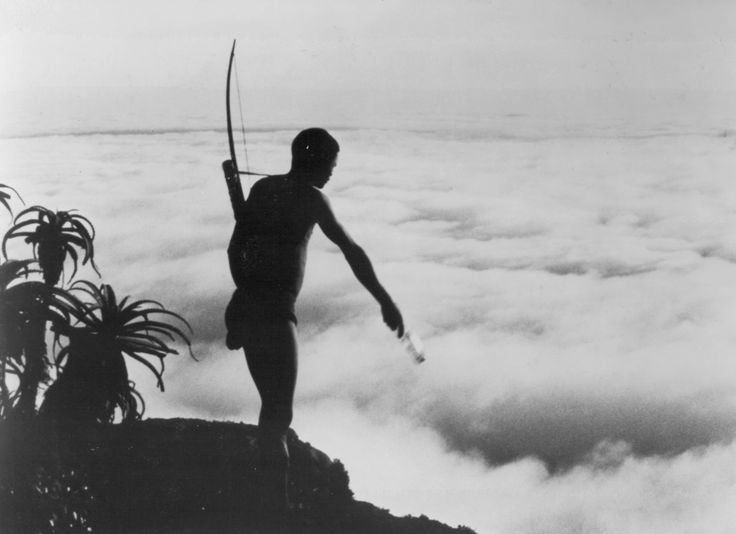
A favorite movie from my childhood was the 1981 South African film The Gods Must Be CrazyIt’s hysterical. It’s a rollicking story about an African bushman named Xi who is sent by his tribe to hurl a Coke bottle off the edge of the earth. The bottle had been dropped from an airplane, but they conclude, since it came from the sky, that it had been given by the gods.

It is like nothing they’ve ever seen, and can be used to do everything from milling grain to playing music. But there’s a problem. There is only one. Eventually it begins to divide the tribe—at one point being employed as a weapon.

So they decide that the gods have made a mistake in giving them this object, and Xi is sent on his mission, during which he encounters the civilized world in all of its absurdity. Hilarity ensues.

And the premise that the gods have given a gift we don’t fully know how to handle seems to parallel our conundrum with the Scriptures.

What are they really? Mostly stories, and fairly unresolved ones at that! If we receive them as they offers themselves to us—implicitly, explicitly and in their given form—we are presented with a Creator whose prefered method of self-disclosure is to involve himself in the lives of real people, then prompt them to record an account.

Almost every story leaves us perplexed, right? Sure we can sift out the troublesome bits, but isn’t that a troublesome thing to do? Isn’t that akin to saying, “the gods must have made a mistake”? Continue reading “Revelation | #Friday500”

For Your Consideration (03/22/17)


light-bulb-1246043.jpg

IMAGINATION AS HUMANNESS

Christians believe that the essence of humanness is the imago deithe “image of God”.  In other words, we are human insofar as we mirror the qualities of our Maker.

As I interact about this topic with college students, I invite them to observe two fairly obvious characteristics of humanity: (1) that we are singularunlike any other species in terms of what we are capable ofand (2) there is clearly something very wrong with us. No other species enacts such ugliness and evil.

And so I was intrigued by the review of the book The Creative Spark by Agustín Fuentes, the chair of Anthropology Notre Dame, in the Economist.

He argues from the idea of niche construction (studying how animals interact with their environments) that humans are “niche constructors extraordinaire”. There is almost no limit to which humans shape the world around them. (Unlike, say, a beaver who is limited to waterways and trees.)

His conclusion?

Imagination is what makes us essentially human. Continue reading “For Your Consideration (03/22/17)”

A Very Old Man with Enormous Wings

finalman
“A Very Old Man with Enormous Wings”  illustrated by Charlotte Riley

The brilliant Gabriel Garcia Marquez would have turned 90 this month. He was a Colombian-born author who wrote such staggeringly beautiful works as One Hundred Years of Solitude & Love in the Time of Cholera. His writing has been described as “magical realism“, but it is, above all, intoxicatingly delightful.

He described his tone during an interview with The Paris Review:

It was based on the way my grandmother used to tell her stories. She told thing that sounded supernatural and fantastic, but she told them with complete naturalness.

And he offers us a trick.

There’s  a journalistic trick that you can also apply to literature. For example, if you say that there are elephants flying in the sky, people are not going to believe you. But if you say that there are four hundred and twenty-five elephants flying in the sky, people will probably believe you.

I was introduced to Marquez through this marvelous short story portraying the comical clumsiness with which the world and the church mishandle the sacred. (And maybe some of the clumsy ways in which the sacred enters our existence, too.)

It’s all over the internet, so I believe it to be public domain. But, if I’m mistaken, you can link to a PDF. The above illustration comes from the talented illustrator Charlotte Riley.

Please enjoy! Continue reading “A Very Old Man with Enormous Wings”

For Your Consideration (03/15/17)

In the spirit of Saint Patrick, I’d like to offer some selections this week around the theme of seeing and responding to the needs of others rightly—if riskily.

I tend to gather a pretty ecclectic offering, and today isn’t really different. However, today’s mix leans heavily toward those speaking from a Christian perspective.

The Christian instinct for human compassion has been under duress of late. Sadly, some Christians have invited the onslaught. But let’s round out the picture, shall we?

THE BRILLIANCE (DOES YOUR HEART BREAK?)

I referenced the Brilliance awhile back, and thought this song was a fitting accompaniment to today’s selection.

It begins,

When the walls fell
And the hungry child
Cried out for help

Did you hear the sound?
Did your heart break?
Does your heart break now?

Continue reading “For Your Consideration (03/15/17)”

Waggle Dance (Diana Thater)

IMG_4867.JPG

Apiologists tell us that when a scout bee discovers pollen, it returns to the hive to do an elaborate dance. This dance is called the waggle dance. It’s purpose? To communicate to the rest of the hive where the food is located; especially if it is far away.

During the waggle dance, the scout runs in a straight line while waggling her abdomen, and then returns to the starting point by running in a curve to the left or right of the line. The straight line indicates the direction of the food in relation to the sun. If the bee runs straight up the hive wall, then the foragers can find the food by flying toward the sun. If she runs straight down the wall, then the foragers can find the food by flying away from the sun. As the dance progresses, the dancing bee adjusts the angle of the waggle run to match the movement of the sun. [1]

Isn’t that fascinating? They dance around the hive, and the others pay such close attention that they know where to find their sustenance. The hive survives on dancing!

Of course, I didn’t learn this from my apiology classes, but from an intriguing exhibit of American video-installment artist Diana Thater‘s work at The Museum of Contemporary Art in Chicago. (Free on Tuesdays!)

Overall her installment at MCA is really enjoyable and well executed. I found myself thinking about how interactive and playful it was; and that it felt well conceived and carried out.

It is called The Sympathetic ImaginationIt finds it’s genesis in a quote by the Nobel Prize winning South African novelist JM Coetzee:

There is no limit to the extent to which we can think ourselves into the being of another. There are no bounds to the sympathetic imagination.

Continue reading “Waggle Dance (Diana Thater)”

Honesty | #Friday500

In 1759 the French Enlightenment philosopher Voltaire published his satirical piece CandideIt tells the fantastical journeys of the simple Candide and his tutor Dr Pangloss. The saga commences when he is expelled from the idyllic Westphalia after being discovered in an innocent romantic liaison with the Baron’s daughter Cunegonde.

Candide is thrust out into a garishly tragicomic world of suffering armed only with the positivist ideas of Pangloss, with whom he is quickly reunited.

All is for the best, in the best of all possible worlds.

Voltaire was lampooning Gottfried Leibniz, the Christian mathematician-philosopher  whose Théodicée built a theological philosophy coining a similar phrasing. (Voltaire considered Leibniz to be a bit of a preening dabbler, and thus credentialed Pangloss a “professor of meta-physico-theologico-cosmolo-nigology”. That one got me!)

It’s a frolicking tale; one in which the obsolescence of Candide’s outlook must be reckoned with. It cannot hold up under the honest scrutiny of even the simplest, so he is forced to form a truer view of the world.

Honesty is a personal varietal of truth, is it not? But it is elusive because it is both objective and subjective simultaneously. (That you are anxious could be honest, but why? That’s a harder truth to name.)

Like Voltaire, we know optimism falls short of truth. But so too does pessimism. Flattery and gossip, cynicism and naiveté, histrionics and denial all evade, to quote Emily Dickinson, “all the truth.” We know this. We usually know when we’re being dishonest.

But the real problem is why. Continue reading “Honesty | #Friday500”

For Your Consideration (02/08/17)

HEY ROSETTA! (KINTUKUROI)

One of the things I’ve enjoyed about writing, is the way it fosters new connections and ideas through the power of conversation.

After my last post (featuring the art of Yeesookyung and the Japanese Kintukuroi  method), I was made aware by a friend of the band Hey Rosetta and their song of based off this art form.

They draw many inferences that jibe with what I wrote. Here are some lyrics:

Oh stand in front of me
Open your eyes like you know me

Oh see inside of me
Lay the heels of your hands upon me
And let your fingers fall

Bless the broken bowl
Make it whole, make it better than it was before
Make it better than it was before!

Continue reading “For Your Consideration (02/08/17)”