Apiologists tell us that when a scout bee discovers pollen, it returns to the hive to do an elaborate dance. This dance is called the waggle dance. It’s purpose? To communicate to the rest of the hive where the food is located; especially if it is far away.
During the waggle dance, the scout runs in a straight line while waggling her abdomen, and then returns to the starting point by running in a curve to the left or right of the line. The straight line indicates the direction of the food in relation to the sun. If the bee runs straight up the hive wall, then the foragers can find the food by flying toward the sun. If she runs straight down the wall, then the foragers can find the food by flying away from the sun. As the dance progresses, the dancing bee adjusts the angle of the waggle run to match the movement of the sun. [1]
Isn’t that fascinating? They dance around the hive, and the others pay such close attention that they know where to find their sustenance. The hive survives on dancing!
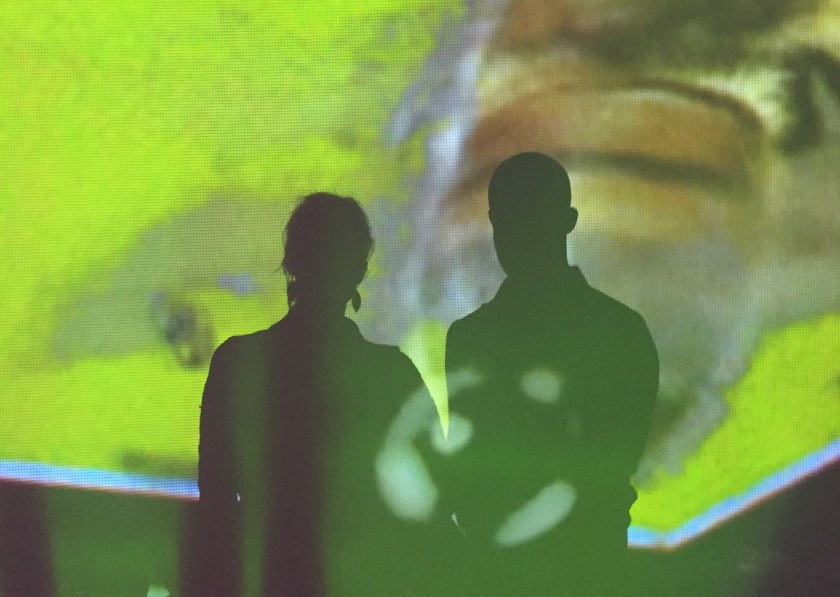
Of course, I didn’t learn this from my apiology classes, but from an intriguing exhibit of American video-installment artist Diana Thater‘s work at The Museum of Contemporary Art in Chicago. (Free on Tuesdays!)
Overall her installment at MCA is really enjoyable and well executed. I found myself thinking about how interactive and playful it was; and that it felt well conceived and carried out.
It is called The Sympathetic Imagination. It finds it’s genesis in a quote by the Nobel Prize winning South African novelist JM Coetzee:
There is no limit to the extent to which we can think ourselves into the being of another. There are no bounds to the sympathetic imagination.


 HUMANS OF NY


 Matthew Podszus