Sympathy

I was sitting at an American-style cafe in Hanoi having hamburgers with a few Vietnamese English-language students and a couple other Americans. We were part of a partnership program with a local foreign language university, in which native English speakers taught and tutored Vietnamese students. We often received social invitations for outings from our students, and this was one such occasion. During the course of the meal, one of the Vietnamese students made a joke that none of us Americans understood. This had happened quite a bit during our time there. Though we’d made some half-hearted efforts to grasp one-another’s humor, we tended to simply smile benevolently and move on. I determined then and there that this time would be different!

“Ok, Ok. Back up. I want to understand this joke; I need to. We’re gonna talk this out until we understand why that was funny,” I said emphatically.

And so we circled back. At each point of ambiguity, we clarified. We defined terms and gave background and returned again and again to the simple question: Why is that funny? This went on for 15 or 20 minutes. Eventually the group of Vietnamese students were all exchanging puzzled glances, as were my group of American companions. We all began laughing at our utter futility in achieving any shared understanding of the humor of this joke—despite our determined efforts!

We had failed my challenge spectacularly and so resumed eating. Eventually someone brought up a new topic.

During my life I’ve been inculcated to value empathy over sympathy. To see it as superior. Sympathy, I’ve gathered, is some distant brand of pity, absent of real understanding. What we ought to practice is empathy; a personal involvedness of putting one’s self into the shoes of the other. I’m just not sure I agree with that anymore. I suspect sympathy is the more rare of the two, and certainly the more needed.

Every one of us is ‘pathic’; driven and delighted by our inner tides of pathos, our feelings, emotions, passions! Often we struggle to understand even our own pathos, and, if we’ll admit, struggle to really understand others—even others we really should understand like spouses and siblings and close friends. We muse in their absence, Why on earth would they do that? Empathy, at least as it is commonly understood, turns out to be a veritable impossibility, and we may be well-served to laugh at its comical elusiveness. It is sympathy on which we must depend; a kind attitude toward those we find all but incomprehensible.

Continue reading “Sympathy”

Imagination

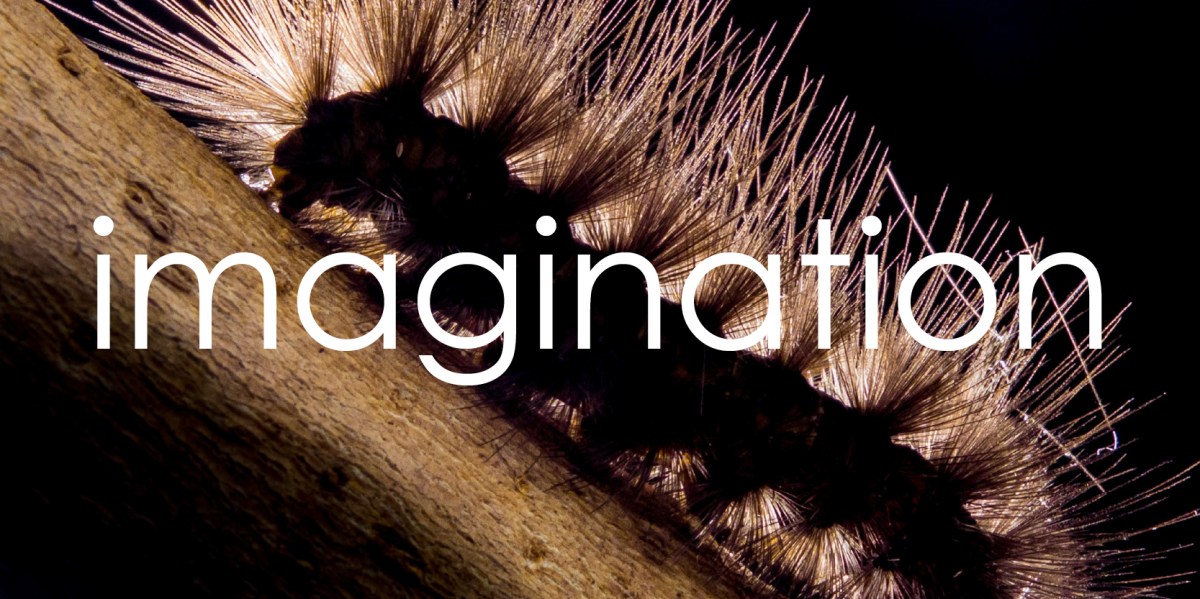
Annie Dillard recounts a riveting—if unsettling—phenomenon of nature in her splendid work Pilgrim at Tinker Creek. In the pages of 19th century naturalist and entomologist J. Henri Fabre’s journals are found some peculiar habits of pine processionary caterpillars.

Dillard writes,

Pine processionaries are moth caterpillars with shiny black heads, who travel about at night in pine trees along a silken road of their own making. They straddle the road in a tight file, head to rear touching, and each caterpillar adds its thread to the original track first laid by the one who happens to lead the procession.

Fabre housed a group of pine processionaries in his conservatory for observation, where he initiated an experiment demonstrating, in Dillard’s words, their “blindered and blinkered enslavement to instinct.” By modifying the silk track in their glass enclosure, he created a closed circuit. Fabre wanted to determine how long they might travel its futile track. “To his horror,” Dillard reports, “they march not just an hour or so, but all day.” Day after day Fabre observes them slogging in their futile orbit of “imbecility”. A time or two they reorganize, yet, in tragic form, wander again onto their cruel circuit and resume their “dismal parade.” Fabre puts food and water alongside their path to no avail. Deprived of moisture and nutrients, the hapless column of insects processes to their collective demise.

Fabre notes with incredulity the lack of “any gleam of intelligence in their benighted minds.”

Dillard is more disquieted still,

It is the fixed that horrifies us, the fixed that assails us with the tremendous force of its mindlessness…

It is motion without direction, force without power, the aimless procession of caterpillars round the rim of a vase, and I hate it because at any moment I myself might step to that charmed and glistening thread.

Our world is thoroughly laced with such charmed, glistening yet altogether deadly threads, onto which all are prone to wander. Isn’t it? Maybe you suspect you are straddling one such thread presently. How does one find one’s way off, and, perchance, liberate others in the process? Continue reading “Imagination”

Resolve | #Friday500

Over the course of my life I’ve determined that two types of people inhabit this earth: (1) those in whom resolutions imbue an energetic and aspirational focus with propelling effect, and (2) those in whom resolutions behave like a kind of masochistic minefield, with which they feel obliged to afflict themselves each year in order of appease the gods of social custom. I’d place myself in the latter category. [Sigh.]

This can probably be generalized to the goal-makers and non among us, and I’m certain that it has everything to do with the way each of us related to such idealized projections of our future-selves. All I know is how they make me squirm.

“Are you making a list of things to feel horrible and guild-ridden about this year?”

Do I sound jaded? I suppose I am.

And still, despite myself, I’m allured, as moth to flame, by the renovative possibilities represented in these Gregorian demarcations of time—carpe annum! (Or does the annum carpe me?) I’m a glutton for punishment.

Now that I’ve got that off my chest, I do want to offer up some musings on the hullabaloo of this New Year’s ritual, because I do strongly believe that if there’s one thing our whole freakin’ society needs right now it is a good, long, hard look in the mirror. Am I right? I think we can all agree that 2017 was weird, and not “good weird”. More like, “What in the Sam Hill is happening?” weird. And I bet 2017 showed you some of your own more, shall we say, interesting qualities? Yeah, let’s go with interesting. There aren’t enough memes.

Where to go from here?

Robert Frost wrote a satirical (yes, satirical) poem which—its familiarity notwithstanding—offers us an apt image for occasions like this:

I shall be telling this with a sigh
Somewhere ages and ages hence:
Two roads diverged in a wood, and I—
I took the one less traveled by,
And that has made all the difference.

The title of the poem is actually The Road Not Taken, which presents the reader with an interpretational conundrum. It was intended as derisive critique of vain agonizing over paths not taken. He wrote it as a good-natured barb toward an indecisive and wistful friend, the poet Edward Thomas, about the inevitabilities of remorse in life filled with choices. It was a joke, but no one laughed. It couched indecision and regret in language of cowardice and naiveté (“Two roads diverged in a yellow wood, / And sorry I could not travel both”), nonetheless the barb inadvertently affixed itself to quivers of arrow and pierced many a heart; including its original recipient, who reported being staggered by it.

It disclosed a common human longing: to reflect on one’s life with joy and not sorrow. Thus Frost’s verse unmoored itself from it’s author’s winking intent, and has exerted its own scionic legacy.

Frost said of one path that it was “grassy and wanted wear”. As so many tread down the thoroughfares of oblivion in our own day, are there not some grassier, if more uneven, paths themselves wanting wear? I think so. I think we can find in these paths some better, if less popular, ways forward. Let’s!

In this post, I would like to offer three preliminary ideas on what might enhance our resolution-ing this time around; call it an assessment of the soil quality in which they might grow. My intent is to follow this up with another post profiling traits of paths we might seek out.

But here I offer three ideas on renewing our resolution-making for the year ahead.

Firstly, don’t our resolutions tend to be very self-focused instead of collective or communal? This betrays a troubling hint of narcissism; that competitive whiff of, “this year I’ll be better than a few more people!” Surely that isn’t what our world needs more of. How about situating our resolutions in a world of personal, important and lasting repercussions; not just the egoism of our age? Maybe invite others into your resolutions?

Am I my brother’s keeper? Hope to God more might answer yes!

Secondly, resolutions tend to value doing over being and becoming, don’t they? This relates to the previous point, but I just wonder if this isn’t a bit shallow. Jesus once called people fools for ostensibly forgetting that he (God) who made the outside of a person also made the inside—implying they were both equally real and important. He also once said what we put into ourselves isn’t the problem, but what comes out. Being and becoming are admittedly harder and resist tidy listing, but lets at least connect our doings to them this year. Travel to become more broad-minded and empathetic, exercise to gain more dominion over self in order to serve others, read to see the world through the eyes and imagination of another with warmth and appreciation.

Visualize the year ahead as an instrument for the shaping of your soul, and resolve to be a willing participant!

Thirdly, our resolutions trend toward quantitative instead of qualitative. That’s a problem, because, per my last item, these could nudge us toward valuing quantity over quality, or betray how expeditiousness too often comes at the expense of the quintessence.

Your life will leave a wake this year. Will it be restorative, beautiful, humane and enriching? By nature, the qualitative defies quantification, but that doesn’t mean it can’t be measured. It is often those around us who might enable us to apprehend our progress in qualitative resolutions—they may even help us frame them!

What I’m advocating is a resolution-outlook that asks more more fundamental questions. What is most needed in the world around me? Who is the version of me I might offer with gladness? How might the quality of my life be enriching in nature?

Lean into the collective, the transformational and the qualitative in 2018. Our world could use these types of resolutions. And I think our world is famished for those who will  forge better pathways, even through the thickets, to more humane destinations. This will require resolve in both its verbal and nounal form: a resolve toward where one will and won’t journey, and the resolve of accepting the assignment, however rugged or lonely.

I imagine, as did Frost, two diverging paths. The inevitability of choice is forgone; either stay the course or deviate, life offers us no passes.

Yet knowing how way leads on to way,
I doubted if I should ever come back.
Way does indeed lead to way, so we do well to chose well our ways when given the opportunity. May your New Year’s resolutions be a form a way-chosing which leaves you with even more splendid, albeit onerous, way-choices one year hence. And may we bring others with us on these grassy paths in want of wear.
Here’s to 2018!

Advent IV | Consolation

As a child I was often beset by vivid and frightening dreams; some of which I still clearly recollect. These would jar me into a terrified, partially-wakeful state—alone in the dark of my bedroom, trapped in suspension between real and unreal. Instinctively, I would take the sole escape route available to me: leaping to the floor and running for my life down the hall into my parents’ room.

“I had a bad dream!” I would cry in quivering desperation, and would be be welcomed to my dad’s side; tucked up under the covers of his bed, where I would shake with tremors for what seemed like hours until the inner storm of dread finally subsided.

Even now, upon awaking from upsetting dreams, I find it impossible to easily shed the images, emotions and impressions upheaved from the pits of my unconscious world. Despite their ridiculous incoherency, dreams still forcefully grip us and render our faculties of rationale all but powerless for a time. At least they do for me.

Not a few have suggested that dreams are transmissions from our subconscious; that inner aspect of self with keen awarenesses, into which we rarely tap during our harried conscious living. I suspect nightmares to be children’s latent alarms of a world of danger; a place where safety might prove very fragile. Something kids don’t know they know, until they’re jolted awake by it!

In this sense, bad dreams are actually true. Adulthood itself is filled with many such violent awakenings, leaving us immobilized and shaken. But where do we flee?

The God of Advent is in the business of consolation; hastening into our darkness! Continue reading “Advent IV | Consolation”

Advent III | Involvement

In the spring of 2006 I traveled with a group of volunteers south to New Orleans. Seven months earlier, Hurricane Katrina had ferociously ambushed the gulf coast, overwhelmed the decrepit levee infrastructure, and had submerged enormous swaths of this city; especially poor communities. Over 1000 people died. Hundreds of thousands lost their homes—many displaced indefinitely. We were caravanning south to offer what help we might.

We spent our first nights in a warehouse with 1000 other volunteers (and rafters full of pigeons doing pigeon things) in the devestated 9th Ward, before accepting an opportunity to trek further south to Plaquemines Parish, where levee embankments rose on either side as far as the eye could see, forming a massive basin of low-lying land pocked with homes and towns and refineries; veritable play-sets in a big bath tub.

After a few days of outdoor work, we headed back to the 9th Ward for our last couple nights and to prepare the volunteer center for the incoming groups. We’d finished our morning’s work when a man arrived at the facility. One of the coordinators talked briefly with him, then turned and yelled, “Any of you want to go help this guy gut his house?”

A group of us piled into two cars and followed him home. We stopped briefly to pick up supplies: shovels, trash bags and crow-bars, work gloves and safety goggles, a papery hazmat suit and filtered ventilation masks. We’d spent the previous few days working outside, and shrugged ambivalently when offered this outfitting.

We pulled up to this man’s home; an unassuming one-level in a working-class St Bernard Parish neighborhood. Apart from the FEMA trailer in the driveway, all seemed ordinary.

“Wanna come take a look around?” asked the owner in his thick, peculiar accent.

“Yeah, sure!” I piped, in a demonstrable show of eagerness. I faltered however fleetingly, wondering should I don my gear, but dispensed with this thought in an effort not to embarrass my new friend.

He and I ascended the stairs, and he led me across the threshold. Power hadn’t been restored, but natural light dimly lit the interior. It took my eyes a moment to adjust—at which point we were in his living room. Once they did, I was staggered. I was in the midst of dark cavern of mold—floor to ceiling! It was post-apocolyptic. Carpet and curtains and couches and clothing all situated as they’d been 7 months earlier, when storm waters filled the residence to brimming before gradually draining back out. It had remained at the mercy of a warm, subtropical climate since. Food rotted in the refrigerator and cupboards. Mildewed pictures and hangings adorned the walls. I fought for composure, but my mind raced with each breath and blink, What spores and bacteria were plummeting into my lungs; wafting into my eyes? I broke into a sweat. Held my breath.

Finally, I gasped, “Well, let’s get started!” and hurried out of the house. Once outside, I exhaled then inhaled deeply.

Someone asked, “We gonna need those suits?” My expression told all. Yeah, we’re gonna need those suits! Minutes later we looked like something out of a Stanley Kubrick film and ventured in.

Actual human involvement often resembles this—entrance into disturbing morass—despite outward appearances, the internal decay can be alarming. What am I doing here? Where is my hazmat suit?

The God of Advent is a God of startling involvement. Hallelujah! Continue reading “Advent III | Involvement”

Advent II | Vulnerability

It is as vivid today as it was nearly 13 years ago. My wife and I were bleary-eyed and spent. We’d awoken from a second night of fitful interrupted sleep at the hospital, and were readying ourselves to return home. We should not have been operating heavy machinery, yet would soon be driving home in our car. Not only that, but we would be carrying delicate and priceless cargo during this short trip; our minuscule firstborn child nestled in her carseat like a pea in the palm of a hand.

Our furtive looks betrayed self-doubt: Are we allowed to do this?

We cinched her into her 5-point seat, then cinched it into our Subaru and puttered our way home, hearts thumping with holy apprehension. This is a right of passage. A vulnerable human life comes under the novice care of young parents. Of course millions of parents are in the midst of this around the world each day, but, to us, it seemed like we’d been entrusted with the most delicate and valuable thing to ever exist. Maybe we had.

The God of Advent is a God of magnificent vulnerability.

If you read my posts, you’ve probably picked up on the fact that I love language and the subtle splendor of semantics. The word vulnerable stems from the latin vulnus or “wound”. To be vulnerable is to make one’s self wound-able, and it is a gift of love and hope—if not trust. Continue reading “Advent II | Vulnerability”

Generosity | #Friday500

If Thanksgiving is found to occasion head-on collisions with our complicated relationship to gratitude, then it is the privilege of Christmas to do the same for generosity. Generosity is the nebulously secularized “spirit of the season” and it haunts us at every turn!

Don’t believe me? Is there any pang so  sharp, so sudden as being presented a gift by one for whom we have nothing to present in return? This pang is pantheonic among holiday trials, and is likely familiar to each of us. And it reveals the transactional captivity of generosity in our culture. Unreciprocable giving rattles the cage of our soul, and we’re left stammering like lunatics! (“You… You shouldn’t have. I-I don’t. I haven’t had a chance…”)

Christmas undoubtedly places generosity on the table like a big holly and silver-bell centerpiece. It is unavoidably before us, and, along with the aforementioned pangs, we must experience a miraculous birth with some prolonged effort—the delivery, as it were, of a healthy and whole generosity of spirit.

Christmas is, after all, a story of miraculous birth. Continue reading “Generosity | #Friday500”

Advent I | Disposition

In my 20s I made a New Year’s Resolution to swim in natural bodies of water. It was my way of recognizing and confronting a tendency to prefer comfort over experience. If I were on a hike, or strolling by the ocean or boating, I determined to jump in and swim; to make it my default.

Over the coming months I swam in everything from frigid snow-melt in the mountains of Colorado to the warm sway of Hạ Long Bay in Vietnam. These swims could prove jarringly cold or unexpectedly pleasant, thrilling or cathartic, but, at the threshold of each plunge, I found myself questioning the value of my strange resolution—cold water makes me reticent like few things. Never once did I suffer regret for these dips. They became threads in the fabric of my life when I was most alive; exhilarated! I’ve sought to make this my rule ever since, and, though always apprehensive, I’ve never yet been disappointed.

Suspension in calm powerful currents of natural water is a baptism of sorts; an exiting of one reality and submersion into another. The prospect of being cold, wet and buffeted always gives rise to reluctance, yet each river, each stream, each lake or ocean or sea or pond offers an undeniable invitation; an impromptu adventure, if only I’ll have it!

I am being converted. Continue reading “Advent I | Disposition”

Gratitude

If you are at all like me, the title of this post caused something like a sinking in your gut. Is it again that time of year where I must be browbeat and chastened over my deficiencies of gratefulness? And, if you’re like me, you’ve long since resigned yourself to these seasonal flagellations as a matter of course. Perhaps a morbid counterweight to the excesses of holiday merriment? If we must.

Must we?

Why are such forced expressions of gratitude so inwardly discordant? What is gratitude anyway, and why is it so hard to simply conjure on demand?

Gratitude is a reflex of the soul; a natural spiritual spontaneity—if you will—for which there is no synthetic. Continue reading “Gratitude”

Vocation | #Friday500

My family watched the movie Mrs. Doubtfire a few weeks ago. It still basically holds up, albeit with it’s share of obligatory yet pointless 90s-era lewd innuendos. Oh well. You may remember the climactic scene where Daniel (played by Robin Williams) books himself simultaneously for a family dinner as Mrs. Doubtfire and a work interview at the same restaurant. What ensues is more uncomfortable than funny and demands the viewer suspend disbelief altogether, as Williams scrambles back and forth changing in and out of drag until his false persona arrives for the interview and, eventually, his true identity is literally unmasked before his estranged wife.

The scene is a forced plot device and is implausible in the extreme, yet it bears an eerie resemblance to our own precarious lives of scramble, in which we careen like pinballs around our days trying to ding all the right bumpers and ramps and kickouts. A constant toggling of personas that oftentimes leaves us feeling on the brink of exposure. At times it may be thrilling, but isn’t it all a little insane? That’s exactly how we can end up feeling—insane! Detached from self, we paddle ourselves around the world trying to rack up scores on some arbitrary machine.

Somewhere in all the cacophony we’re making a simple, unspoken inquiry: “What am I doing here?” More than anything it’s a yelp borne from the pangs of our finitude distended into an infinite abyss of needs and demands.

Our ache is for a sense calling, or, to use the Latinized term, “vocation.”  Continue reading “Vocation | #Friday500”